
Trilogy™ Transcatheter Heart Valve System for Aortic Valve Regurgitation
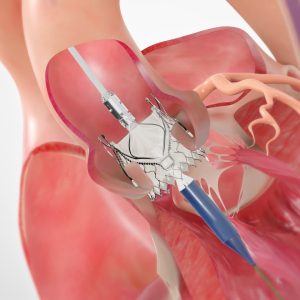 The Trilogy™ Transcatheter Heart Valve System is a minimally invasive treatment for certain patients with severe aortic regurgitation, also known as aortic insufficiency. Aortic regurgitation occurs when the aortic valve does not close tightly, allowing blood to leak backward into the heart instead of continuing out to the rest of the body.
Over time, this backward flow can force the heart to work harder and may lead to symptoms such as shortness of breath, fatigue, chest discomfort, palpitations, or swelling.
For patients who are at high risk for traditional open-heart valve replacement, Trilogy™ offers a catheter-based option designed specifically to replace a leaking aortic valve without open-heart surgery.
How does it work?
Trilogy™ is a type of transcatheter aortic valve replacement, or TAVR. Instead of opening the chest to replace the diseased valve, the new valve is delivered to the heart through a catheter, typically through an artery in the leg.
During the procedure, a catheter containing the replacement valve is inserted through the femoral artery and guided to the heart. The Trilogy™ valve is carefully positioned inside the patient’s existing aortic valve.
Three specialized locators attach to the native valve leaflets to help position and secure the replacement valve. Once the new valve is deployed, it begins controlling blood flow through the heart and helping prevent blood from leaking backward. The catheter and delivery system are then removed.
Aortic regurgitation can be particularly challenging to treat with some transcatheter valves because patients may not have the calcium buildup that helps anchor traditional TAVR devices. Trilogy™ was designed specifically for this anatomy, using its locator technology to secure the valve directly to the native aortic valve leaflets.
Am I a good candidate for treatment?
Trilogy™ may be an option for patients who:
- Have symptomatic, severe aortic regurgitation
- Have a native aortic valve with three leaflets
- Are considered at high or greater risk for surgical aortic valve replacement
- Have anatomy that is appropriate for the Trilogy™ system
- Are evaluated by a multidisciplinary cardiovascular team that determines a transcatheter approach is appropriate
Determining whether Trilogy™ is right for you requires a comprehensive evaluation. Our structural heart team may use echocardiography, CT imaging, cardiac catheterization, and other testing to assess your valve, heart function, blood vessels, and overall health.
What can I expect after treatment?
Because Trilogy™ is implanted through a catheter rather than traditional open-heart surgery, there is no large chest incision.
After the procedure, you will be closely monitored while our team evaluates your heart function, the replacement valve, and the catheter insertion site. Your individual hospital stay and recovery time will depend on your overall health and how you respond to treatment.
Follow-up care is an important part of treatment. Your cardiologist will monitor the function of your new valve and your heart over time and will let you know when you can safely return to your normal activities.
At Deborah Heart and Lung Center, patients with aortic valve disease have access to a structural heart program experienced in advanced catheter-based valve procedures and complex heart disease. Our multidisciplinary team evaluates each patient individually to determine the most appropriate treatment approach, whether that includes minimally invasive transcatheter treatment or surgical valve replacement.